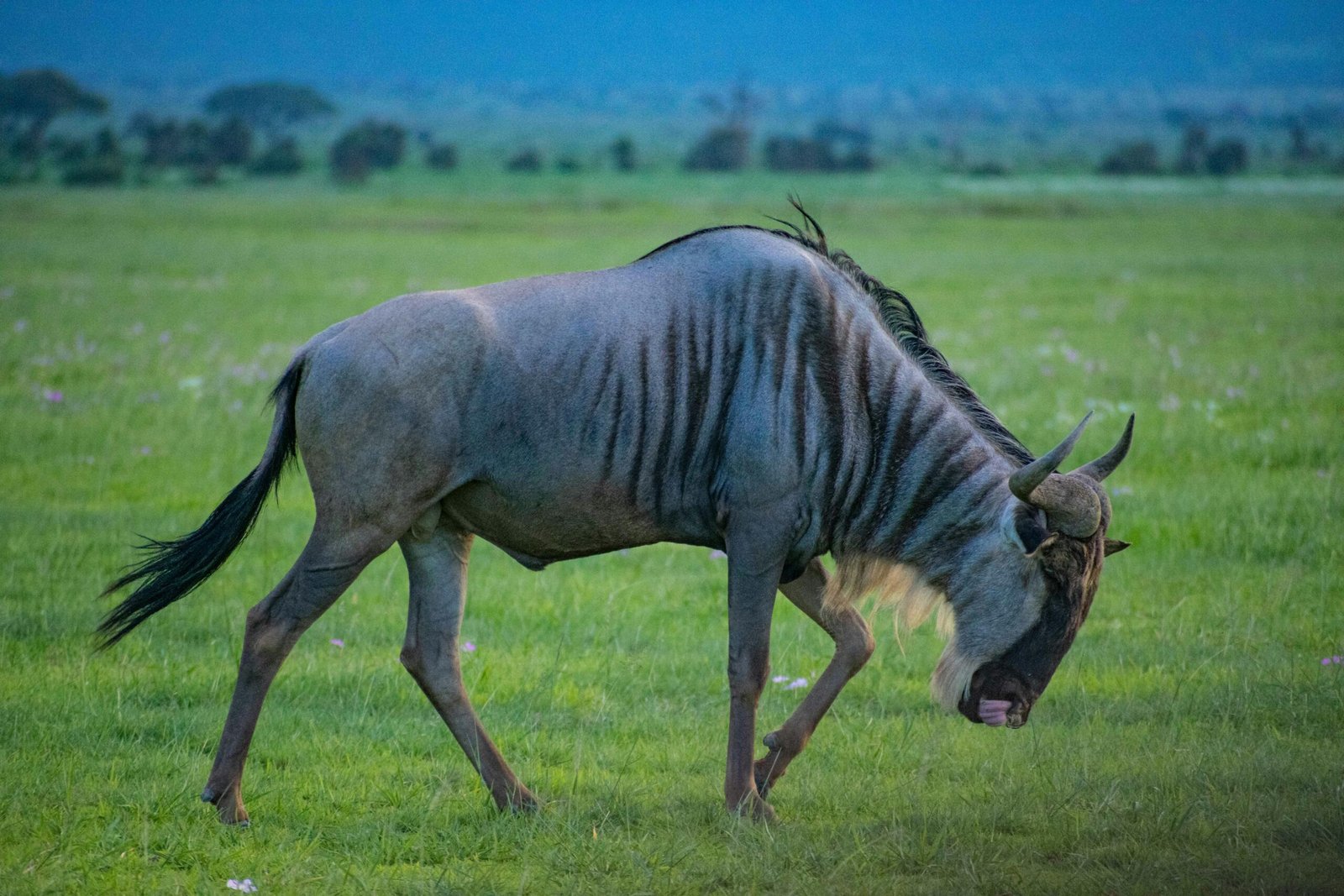

The Great Wildebeest Migration is widely celebrated as the 8th Wonder of the World, drawing thousands of adventure travelers to Kenya every year. Over 1.5 million wildebeest, 200,000 zebras, and hundreds of thousands of gazelles journey across the golden savannah of the Masai Mara in search of fresh grazing pasture.
Whether you are a wildlife photographer or a budget traveler, this guide covers everything you need to know about the Great Wildebeest Migration: movement timelines, river crossing locations, updated park entry fees, and travel requirements.
1. What Triggers the Great Wildebeest Migration?
The Great Wildebeest Migration is a continuous, year-round journey across East Africa driven by seasonal rainfall patterns.
🦬 The Annual Great Wildebeest Migration Cycle
Calving Season
Location: Southern Serengeti & Ndutu
Thousands of calves born daily with peak predator activity.
Trek North
Location: Western & Central Serengeti
Massive herd columns move northwest as heavy rains begin.
River Crossings
Location: Masai Mara (Kenya)
Iconic Mara & Talek River plunges during peak safari season.
Journey South
Location: Eastern Serengeti
Herds trek back south following short rains to reset the cycle.
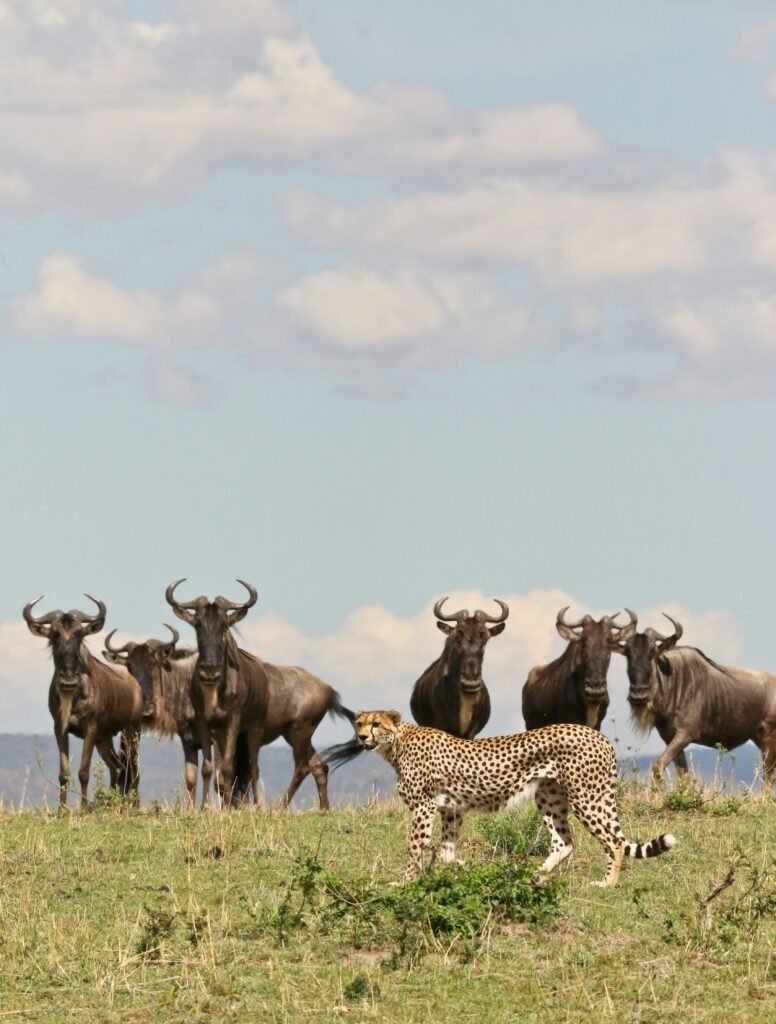
The mega-herds cover more than 1,000 kilometers annually between Tanzania’s Serengeti and Kenya’s Masai Mara. Along the way, apex predators like lions, leopards, cheetahs, and Nile crocodiles stalk the herds, making it one of the most dramatic wildlife spectacles on earth.
2. Month-by-Month Great Wildebeest Migration Calendar
Tracking the Great Wildebeest Migration requires understanding where the herds graze throughout the year.
| Months | Primary Location | Migration Event |
| January – March | Southern Serengeti & Ndutu | Calving Season: Thousands of calves born daily |
| April – May | Central & Western Serengeti | Herds trek northwest as heavy rains begin |
| June – July | Northern Serengeti | Herds gather near major river obstacles |
| August – September | Masai Mara (Kenya) | PEAK SEASON: River crossings at Mara & Talek Rivers |
| October – November | Masai Mara Reserve | Herds graze before heading south to Tanzania |
| December | Southern Serengeti Plains | Herds return to short-grass plains |
3. Witnessing the Great Wildebeest Migration River Crossings
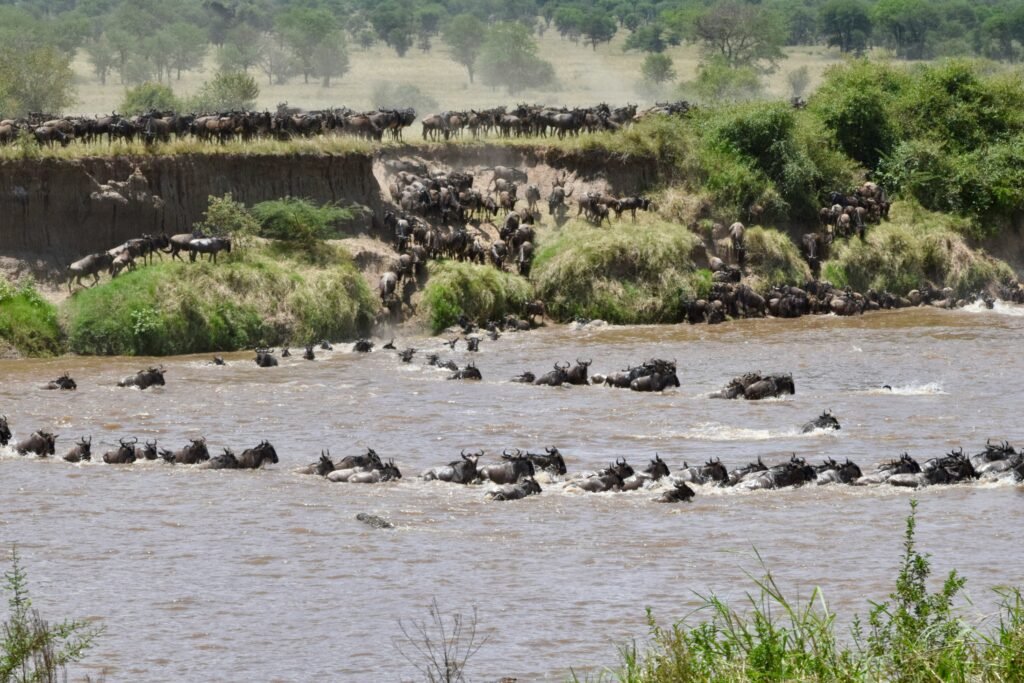
The climax of the Great Wildebeest Migration takes place between August and September when herds cross the Mara River and Talek River.
Thousands of wildebeest gather along steep riverbanks. Driven by survival instinct, a single lead animal leaps into the water, triggering a massive stampede through crocodile-infested channels.
Pro Tips for River Crossings:
- Best Time of Day: Crossings typically happen between 9:00 AM and 3:00 PM as temperatures rise.
- Patience Required: Herds can hesitate at riverbanks for hours before jumping.
- Camera Setup: Use a telephoto lens (200mm–600mm) and high shutter speeds (1/2000s) to capture splash action.
4. Updated 2026 Masai Mara Park Fees & Conservation Rules
Visiting the Great Wildebeest Migration in Kenya requires knowing the updated entry rates enforced by the Narok County Government.
Official 2026 Park Entry Fees
| Visitor Category | Low Season (Jan 1 – Jun 30) | High Season (Jul 1 – Dec 31) | Pass Validity |
| Non-Resident Adult | USD $100 / day | USD $200 / day | 12 Hours (6 AM – 6 PM) |
| Non-Resident Child (9–17 yrs) | USD $50 / day | USD $50 / day | 12 Hours (6 AM – 6 PM) |
| Kenyan Citizen Adult | KSh 1,500 / day | KSh 3,000 / day | 12 Hours (6 AM – 6 PM) |
⚠️ Important Note: Park entry rates, vehicle tariffs, and payment guidelines are subject to periodic updates by local authorities. Always verify current tariffs on the official Narok County Government Portal prior to your trip.
Essential Park Rules
- 12-Hour Passes: Passes are valid strictly from 6:00 AM to 6:00 PM on the date of purchase.
- No Off-Road Driving: Off-roading carries heavy spot fines to protect riverbank ecosystems.
- Vehicle Limits: A maximum of 5 vehicles may observe a river crossing point simultaneously.
5. How to Reach the Masai Mara from Nairobi
Traveling to see the Great Wildebeest Migration from Kenya’s capital is straightforward:
- By Air (45–60 Minutes): Flights depart daily from Wilson Airport (Nairobi) directly to Mara airstrips like Sekenani, Keekorok, and Musiara.
- By Road (5–6 Hours): Drive from Nairobi via Mai Mahiu and Narok Town to Sekenani or Talek Gate in a 4×4 safari vehicle.
6. Accommodation Options for the Great Wildebeest Migration
Travelers visiting during the Great Wildebeest Migration can choose between luxury lodges inside the reserve and affordable budget options outside the park gates.
🏨 Where to Stay During the Migration
Inside Park Lodges
- Direct River Access: Positioned close to main river crossing zones.
- Zero Gate Queues: Game drives start immediately without daily gate checks.
- High-Season Pricing: Premium nightly rates and daily park entry fees.
Outside Gate Stays & Airbnbs
- Affordable Nightly Rates: Budget and mid-range options near Sekenani or Talek gates.
- Self-Catering Options: Full kitchens and flexible setups for families and groups.
- Local Cultural Access: Easy access to Maasai community villages and markets.
- Luxury Safari Lodges: Situated directly along crossing routes, offering immediate access to early morning game drives.
- Holiday Stays & Airbnbs: Located near gate towns like Sekenani and Talek, providing private kitchen facilities and lower rates for families and groups.
- Rift Valley Stopovers: You can pair your trip with a stopover in Naivasha or Nakuru.
7. Kenya eTA & Entry Checklist
Every international traveler visiting Kenya to watch the Great Wildebeest Migration must apply for an Electronic Travel Authorisation (eTA).
- Official Portal: Apply exclusively through the official Republic of Kenya eTA Portal.
- Standard Cost: USD $34.09 ($32.50 base fee + processing).
- Processing Window: Submit your application at least 1–2 weeks before departure.
- Documents Needed: Valid passport (6+ months validity), passport photo, flight confirmation, and hotel booking proof.
Ultimate Safari Packing Checklist
| Category | Recommended Items |
| Clothing | Khaki, beige, and neutral tones. Layered fleece for chilly early morning drives. |
| Gear | Binoculars (10×42), DSLR camera with telephoto lens, and extra power banks. |
| Protection | Sunscreen (SPF 50+), wide-brimmed safari hat, and DEET mosquito repellent. |
Final Thoughts on the Great Wildebeest Migration
Experiencing the Great Wildebeest Migration in person is an unforgettable travel milestone. With proper planning, understanding updated park rules, and choosing the right accommodation style, you can enjoy a seamless Kenyan adventure.
Karibu 254 is an independent travel blog dedicated to providing authentic local insights, budget travel guides, and practical advice for exploring Kenya. Bookmark karibu254.com for regular travel updates, local tips, and complete itineraries!
Karibu 254 — Your Ultimate Kenya Travel Guide
Safari Njema, Happy Holidays & See You on the Mara! 🦬🦁